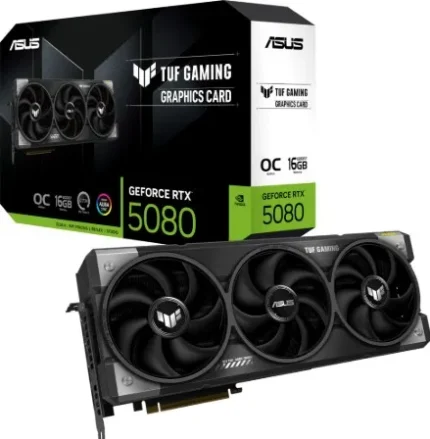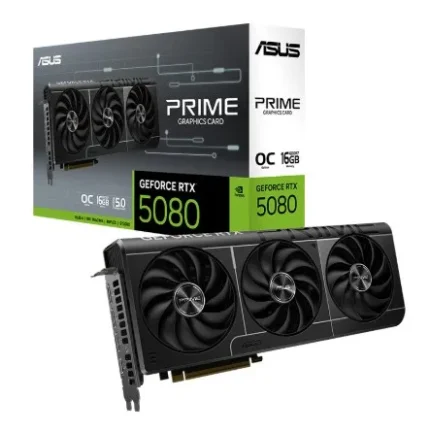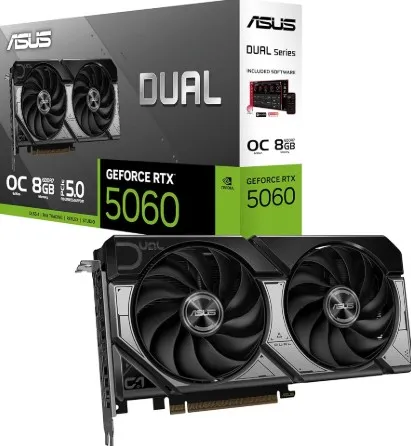

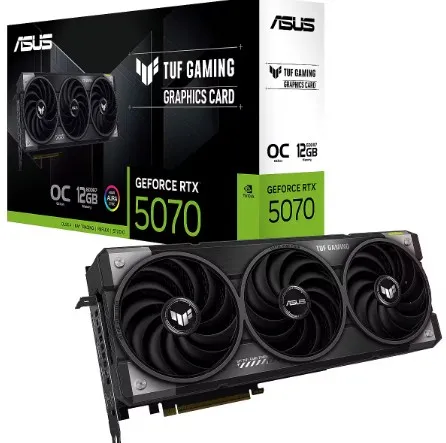
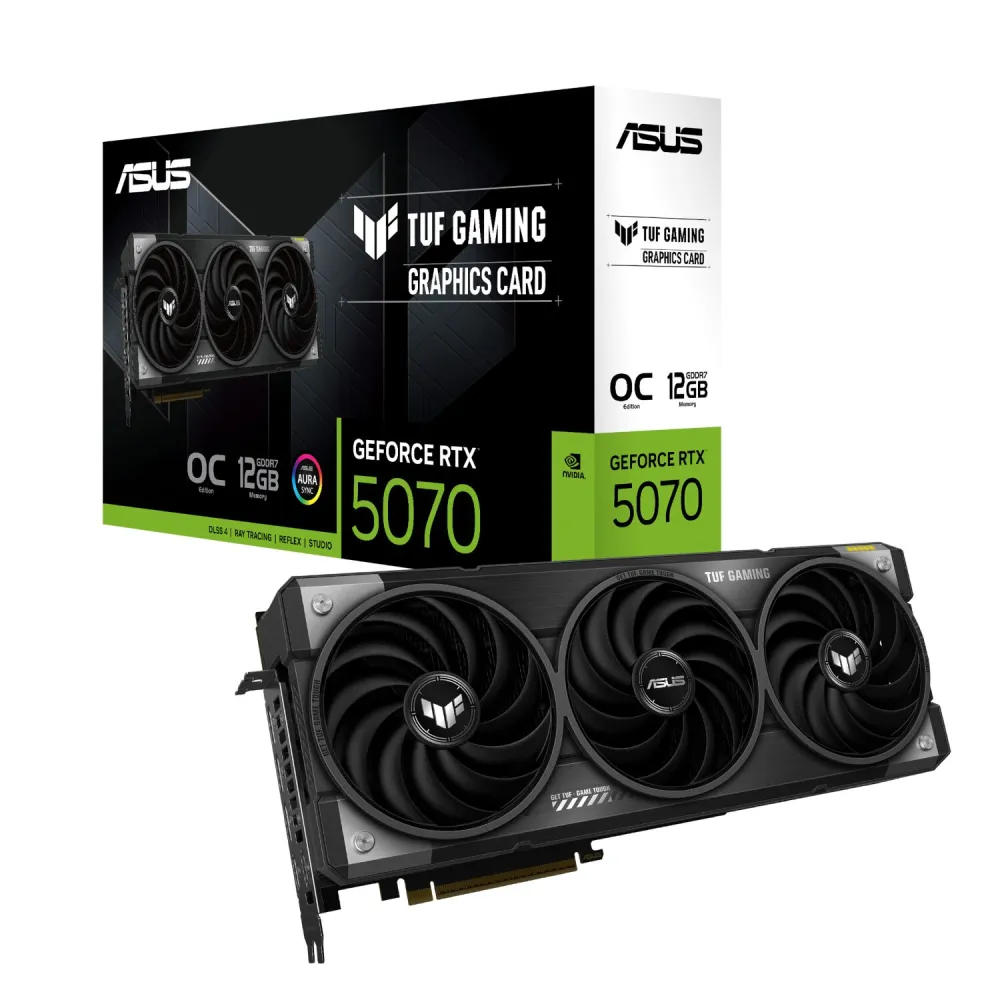
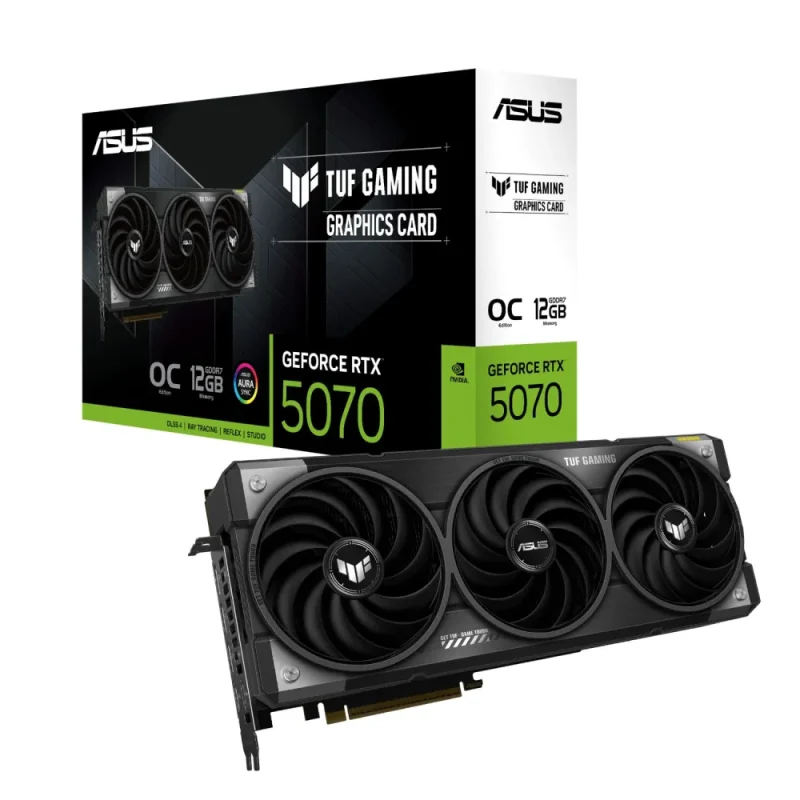
ASUS TUF Gaming • GeForce RTX 5070 • OC Edition
Triple-fan cooling. Four-screen flexibility.
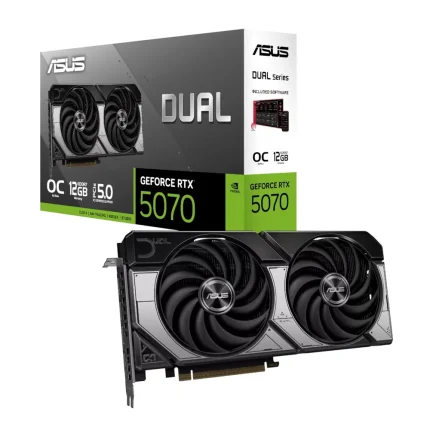
The TUF Gaming GeForce RTX 5070 OC Edition combines NVIDIA Blackwell graphics with 12GB of GDDR7 memory and a reinforced, triple-fan ASUS design. Its appeal goes beyond the GPU: cooling, physical support, accessible display outputs and a choice of BIOS modes are part of the complete build. Match the card’s footprint, power connection and display needs before choosing the rest of the system.

Blackwell platform
A graphics engine for play and creation.
NVIDIA Blackwell provides the foundation for ray tracing, DLSS 4 with Multi Frame Generation and supported creator acceleration. These features depend on compatible games, applications and drivers; they are capabilities rather than a promise of a particular frame rate or export time. 12GB of GDDR7 connects through a 192-bit bus at 28Gbps.

A measured clock specification
Know which setting the number describes.
ASUS lists a default boost clock of 2610MHz and an OC-mode clock of 2640MHz. These are GPU engine values, not memory-clock ratings. GPU Tweak III provides tuning and monitoring tools, while the on-card Dual BIOS switch selects Performance or Quiet mode. Follow the manufacturer’s instructions for changing settings and keep the complete system’s cooling in mind.
Cooling architecture
Move heat through a deliberate path.
A MaxContact heat-spreader design, phase-change GPU thermal pad and three Axial-tech fans form the 3.125-slot cooling assembly. Dual-ball bearings support the fans; the outer pair rotates in the opposite direction to the centre fan. ASUS describes fan stop below 50°C and restart above 55°C. This is temperature-dependent operation, not a guarantee of silence under every workload.
Structure and finish
Support the board as well as the build.
The diecast shroud and aluminium backplate reinforce the assembly, with vents allowing heated air to pass through. ASUS also specifies a protective PCB coating, TUF power components, GPU Guard and a supporting bracket. Aura Sync-compatible ARGB adds a controllable accent. These design features do not make the card immune to moisture, physical damage or unsuitable installation.
Display connections
Five sockets. Four displays at once.
The rear bracket provides two HDMI 2.1b and three DisplayPort 2.1b connections with HDCP 2.3. Up to four displays can operate simultaneously; five physical outputs do not mean five active screens. The manufacturer’s maximum digital resolution is 7680 × 4320. Actual resolution and refresh combinations depend on the monitor, cable, interface and selected output mode.
Fit and power
Leave room for more than the card.
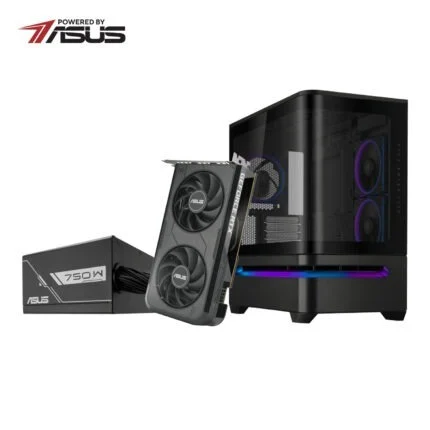
Plan for 329 × 140 × 62.5mm and a 3.125-slot footprint, then allow additional space for airflow, the power cable and any neighbouring expansion cards. One 16-pin connector supplies the card. ASUS recommends a 750W system PSU based on a fully overclocked CPU/GPU configuration; this is a system recommendation, not the graphics card’s own consumption. Use the supplied holder where appropriate and follow the power-supply and card installation instructions.
Software and box contents
A complete starting point, with current support.
The official support route lists ASUS GPU Tweak III, MuseTree and NVIDIA Game Ready and Studio driver options. Select packages for the actual operating system and application; no version is described here as latest. The listed accessory set includes the setup manual, TUF graphics-card holder, Velcro hook-and-loop strap, magnet, certificate, thank-you card and a 1-to-2 power adapter. Regional bundles and offers should be confirmed separately.

Reviews
There are no reviews yet.