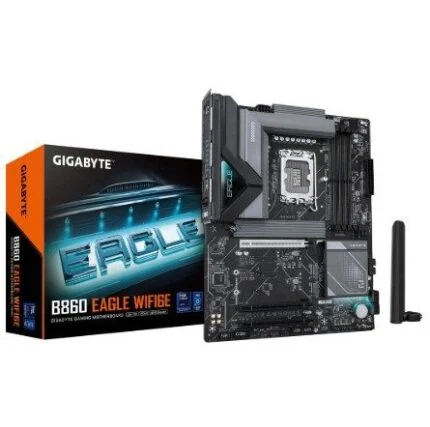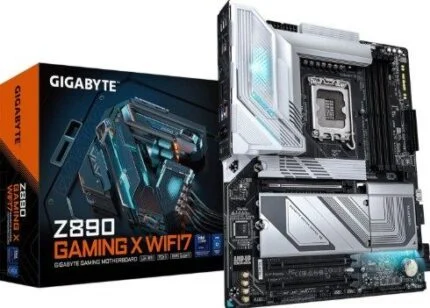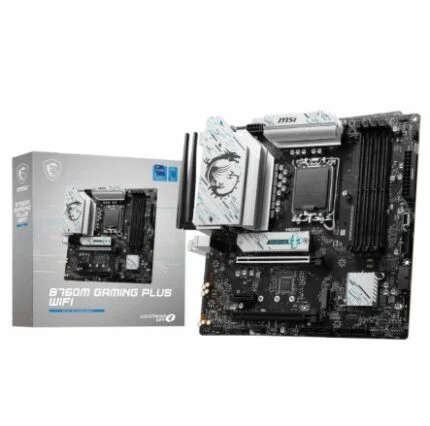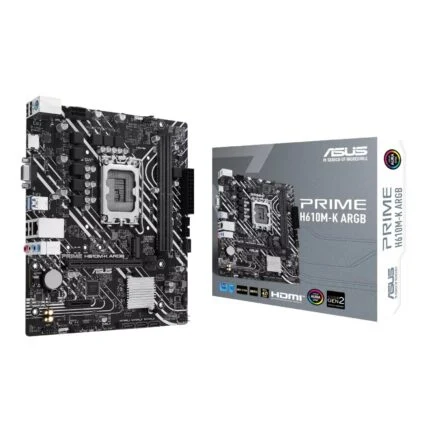

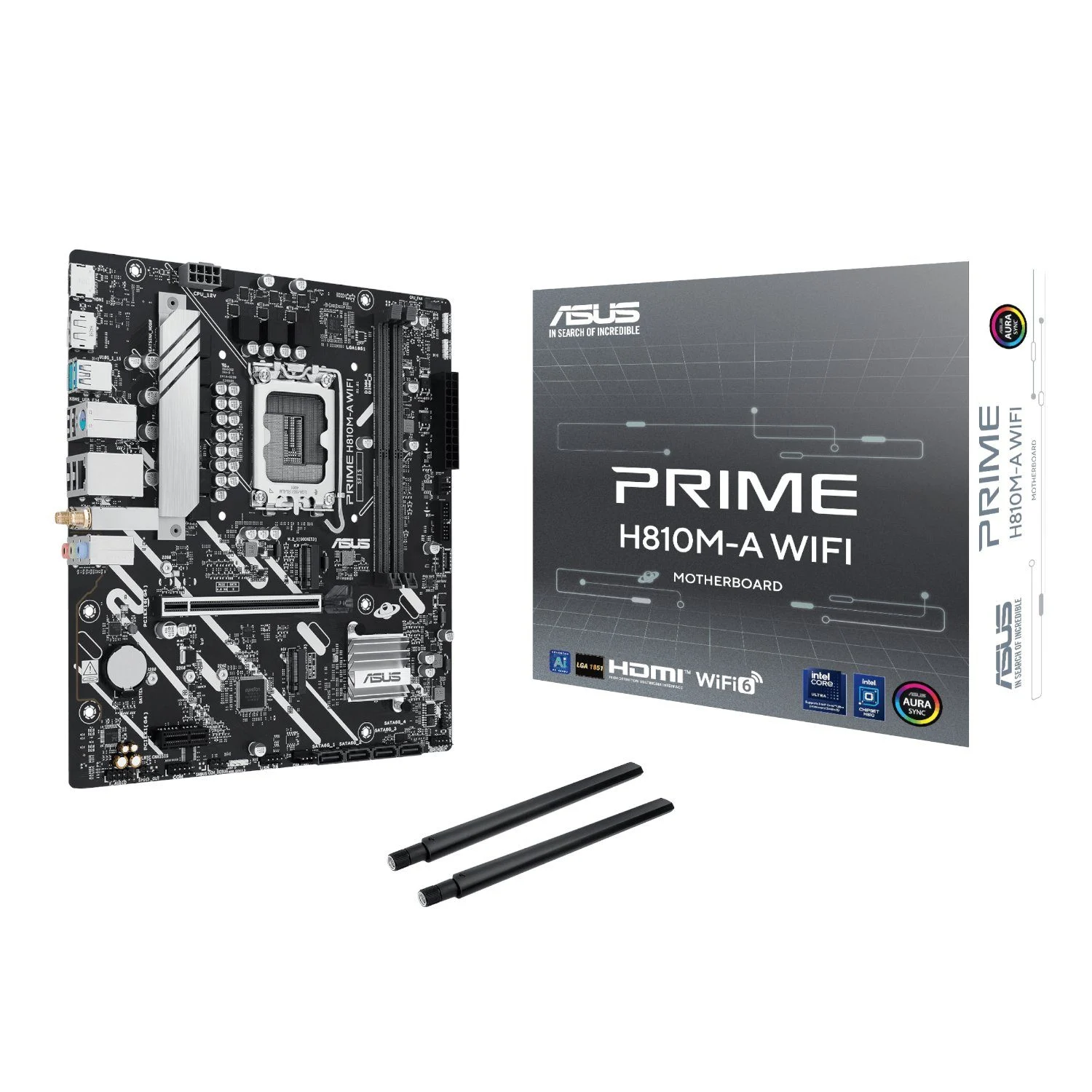
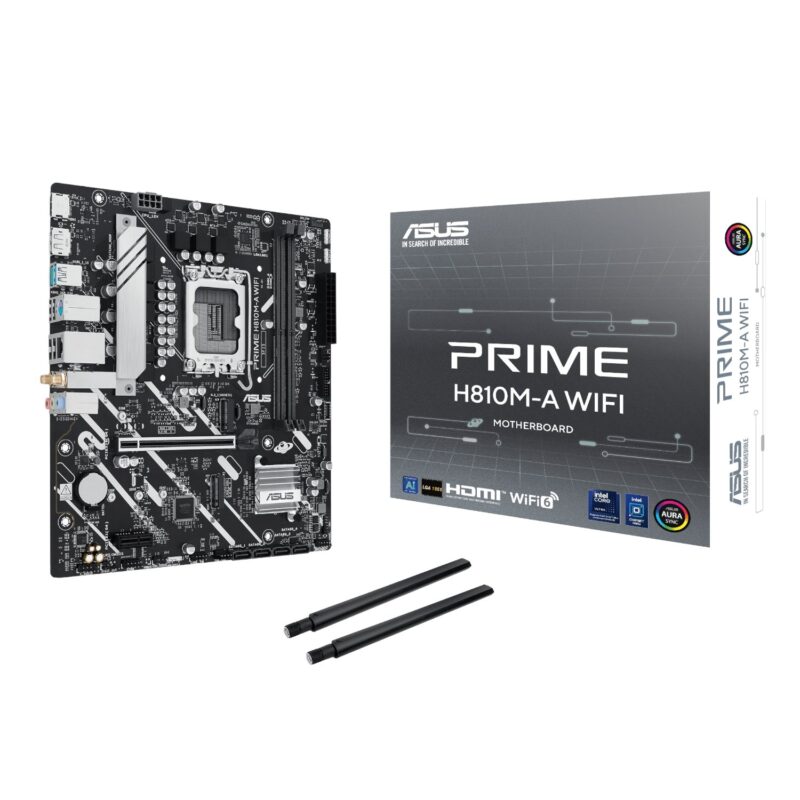
ASUS PRIME H810M-A WIFI
A compact Core Ultra build. Connected from the start.
Build around Intel Core Ultra desktop processors with an LGA1851 socket, two DDR5 DIMMs, two M.2 storage sockets and built-in Wi-Fi 6. A front USB-C header and Gigabit Ethernet offer practical choices for a tidy micro-ATX PC.

Platform first
Match Core Ultra to the right BIOS.
The Intel H810 platform uses LGA1851 for supported Core Ultra Series 2 desktop processors. It is not interchangeable with LGA1700 Core processors. Check the exact CPU support record and required BIOS, especially when considering later 200S Plus processors.
Memory made explicit
Two channels. Two physical sockets.
A matched pair such as 2 x 16 GB fills both DIMM sockets for 32 GB. ASUS now lists up to 128 GB total, while the original manual lists 96 GB; high-density kits require current CPU, BIOS and memory-list validation. DDR5 profile speeds are not a promise that every kit runs at its advertised setting.
Storage you can plan
Two NVMe sockets with different link widths.
Use the 2280 M.2_1 socket for a PCIe 4.0 x4 drive. M.2_2 supports 2242, 2260 and 2280 drives over a PCIe 4.0 x2 link. Four SATA 6 Gb/s ports leave room for compatible larger-capacity drives. The two M.2 sockets do not offer identical bandwidth.
Choose your connection
Wireless freedom, or a wired desk.
The built-in 1x1 Wi-Fi 6 radio supports 2.4 and 5 GHz networks, alongside Bluetooth and an Intel Gigabit Ethernet port. Fit the included antenna assembly and use a suitable router. Wireless speed depends on signal, access point and local conditions; Wi-Fi 6 does not imply a 6 GHz radio.
From rear panel to front panel
Put the ports where you use them.
Two rear 10 Gb/s USB Type-A ports serve compatible fast peripherals. An internal 5 Gb/s USB-C connector can feed a matching case front port at up to 5 V / 3 A, with further USB headers for Type-A and USB 2.0 connections. Case ports and cables must match the headers.
Expansion and display
A clear route for graphics and add-in cards.
A PCIe 4.0 x16 slot connects the main graphics card, with a chipset PCIe 4.0 x1 slot for an appropriate add-in card. HDMI and DisplayPort support up to 4K at 60 Hz from a compatible processor graphics engine; processors without suitable graphics need a discrete card.
Build and personalise
Practical details around the socket.
The VRM heatsink, three fan connections, Q-LED Core diagnostics and SafeSlot Core+ reinforcement support a considered assembly. Three addressable Gen 2 headers let compatible lighting join the build. Check graphics-card width and case access before choosing an expansion card.
Power and fit
Compact dimensions, complete-system planning.
The 244 x 222 mm micro-ATX layout uses a 24-pin motherboard supply and an 8-pin CPU supply. Match case standoffs, LGA1851 cooler fit and airflow, then size the PSU for CPU limits, graphics-card demand and the rest of the system. A motherboard connector count is not a wattage measurement.

Reviews
There are no reviews yet.